


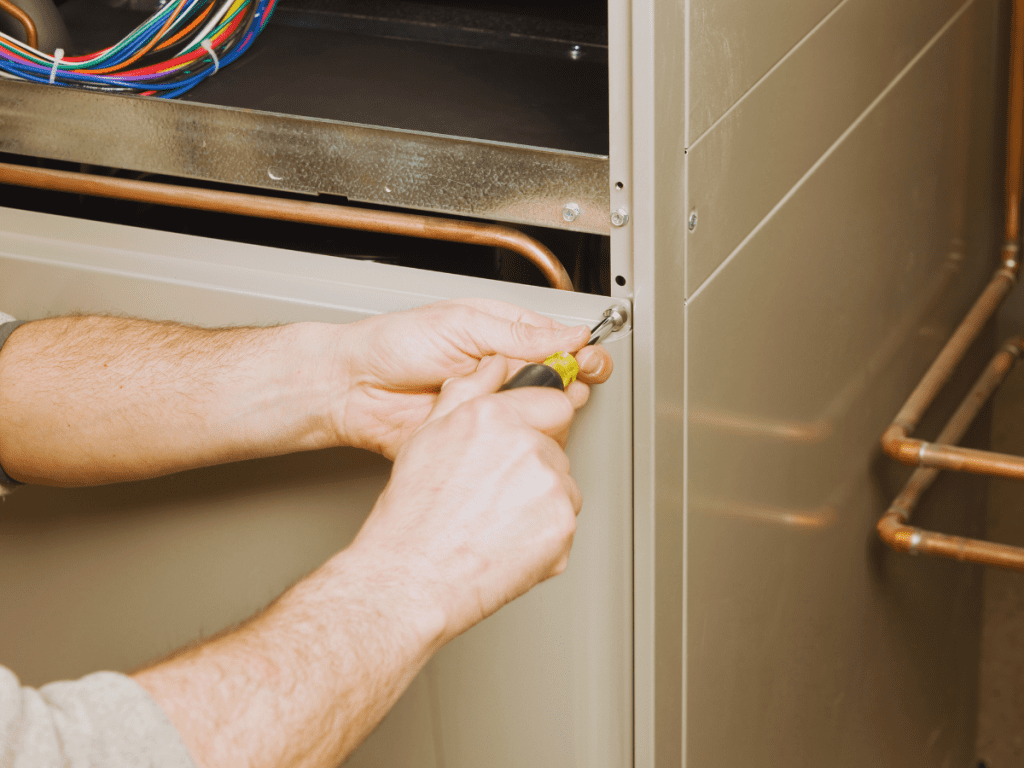
The recent cold spell that sent you to the thermostat to launch the furnace for the first time this winter may have you wondering, how old is that thing?
The HVAC industry says furnaces can last up to 30 years, but the average is 15 to 20 years before the system fails. And that never happens on a sunny spring day.
Before it does, it might be useful to have a plan on what to replace it with, taking into account cost, performance and environmental impact. Which costs more to buy: a gas or electric furnace? About 24% of homes in North Carolina use natural gas for heating, according to the U.S. Energy Information Administration. If yours is one, you already have the gas line and connection, which means your up-front cost to install a new gas furnace would be lower compared to someone who doesn’t have that infrastructure. A gas furnace itself can cost $3,000 to $8,000, according to industry estimates, which can be as much as twice the purchase price of either an electric furnace, which uses coils and a fan to generate heat, or an electric heat pump, which transfers heat rather than creating it. Heat pumps can be used as both heating and air conditioning, avoiding the need for separate devices.
Howstuffworks.com says heat pumps work best in moderate climates and in homes that are well insulated. Is a gas or electric furnace cheaper to run? Operating costs typically run lower for gas furnaces because gas, at the moment, is less expensive than electricity when used for heating. Gas prices do fluctuate and Duke Energy currently has a request for an electric rate hike on the table. The nonpartisan but pro-natural-gas-industry group Consumer Energy Alliance says operating costs for gas appliances are significantly lower than electric heating sources. Technologies for both gas and electric heat likely have improved since your system was installed, and depending on efficiency upgrades, it may be worth replacing your unit even before it dies. The Trump administration’s One Big Beautiful Bill has truncated generous tax credits designed to encourage homeowners to invest in more efficient heat pumps, water heaters and other energy-saving devices. Those credits include up to $2,000 on qualified heat pumps, which can both heat and cool a home, but they’re now set to expire Dec. 31, 2025.
Is a gas or electric furnace better for the environment? Where gas-powered furnaces and other appliances lose big points in comparison to electric appliances is in their effect on the environment, both inside your house and around the planet. According to Yale Climate Connections news service, gas appliances pose health risks because of chemicals in the fuel they burn. Natural gas is primarily methane, a potent greenhouse gas blamed for about 30% of global warming. When released through leaks or incomplete combustion, natural gas also sends carbon monoxide, a poisonous gas, into the air. Burning natural gas also releases nitrogen dioxide, which health officials say irritates lungs and worsens asthma and other breathing problems, especially in children and the elderly. Environmental advocacy groups such as NC Warn, The Nature Conservancy and others say electric utilities in North Carolina and the rest of the country need to move away from a reliance on fossil fuels such as natural gas and coal and transition to renewable energy sources such as solar with battery storage that can reduce carbon emissions and slow climate change.